
Pregnancy and baby chiropractic care in West Los Angeles
Gentle chiropractic care specializing in pregnant women, babies, and growing families
Pregnancy, postpartum recovery, and early infancy can bring tension, discomfort, and restless nights. I help mothers and babies across West Los Angeles restore natural movement and calm an overwhelmed nervous system so sleep improves, feeding feels easier, and bodies move with less strain.
Care is slow, specific, and respectful of your body’s pace. No rushing. No forcing.


The Problem
Pregnancy discomfort is common but that doesn’t mean you have to suffer through it.
Most pregnant women are told some version of the same thing:
-
“Of course you’re uncomfortable — you’re pregnant.”
-
“Sleep is just hard right now.”
-
“Your body will feel better after birth.”
But what I see every week tells a different story.
Much of pregnancy pain comes from tension, restricted movement, and a nervous system stuck in overdrive — not from pregnancy itself. When the body gets support and space, it often responds quickly.
Services
Care that supports your whole family




BENEFITS
What Los Angeles families notice most

Deeper, more comfortable sleep
so you’re not dragging yourself down Ventura Blvd on four broken hours of rest. You wake up clearer, steadier, able to stand longer, walk the neighborhood, make it through work or toddler duty without feeling like your body might give out.

Babies who seem visibly more relaxed
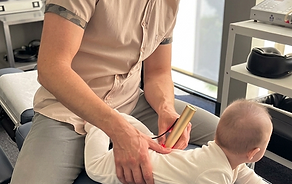
shoulders softer, neck moving both directions, latch improving because there’s less tension to fight against. Parents often say, “It was like night and day,” or “She was a different baby.” Not sedated. Not forced. Just settled.

A nervous system that can finally downshift
for both of you. Babies nap more deeply after sessions. Moms feel their own breathing expand. It’s that exhale you didn’t realize you were holding.

Care that respects the pace of your baby
if they’re hungry, we pause. If they’re overwhelmed, we slow down. Nothing is forced. Many parents say that alone is what made them feel safe.

Easier movement with less pelvic and back tension
so getting in and out of the car in tight parking garages, lifting a growing baby from the crib, or carrying them through the farmers market doesn’t feel like a strategic operation.

Calmer feeding and digestion for newborns
when there’s more space through the neck, ribs, and diaphragm, babies often nurse with less strain, spit up less forcefully, and seem more comfortable between feeds. Less choking. Less frantic crying. More ease.

Confidence as a parent
especially in those first raw weeks. Instead of wondering, “Is this normal?” you can see changes in real time. More range of motion. Less head tilt. A baby who turns both ways. A body that moves more freely. You feel supported — not dismissed.

Support that grows with your family
from pregnancy to postpartum to crawling, walking, and beyond. Whether your baby just went through a long labor, vacuum delivery, or simply the intensity of being born, this care helps them adapt — and helps you keep up.
PATIENT STORY
“I could finally breathe and my body relaxed.”
One patient came in feeling generally okay, but constantly tight. After her first adjustment, she noticed something unexpected.
She could breathe more deeply. Her ribs expanded. Her baby’s movements felt gentler instead of uncomfortable. She slept more soundly that night — not because we chased symptoms, but because her body finally had room to settle.


UNIQUE APPROACH
Better Movement Better Brain
I focus on how movement, tension, and the nervous system interact especially during pregnancy, when your body is adapting daily.
Rather than forcing change, I work with your body to release restrictions and restore balance. I explain what’s happening as we go, check in constantly, and adjust care based on what your body needs that day.
This work supports your body’s ability to regulate itself — which is why improvements often show up in sleep, energy, and overall comfort.

I didn't realize how much better it could actually be. I felt like the baby was able to move around a lot more, and I could even breathe better—that was probably the absolute best feeling.

Brittney D.
I was genuinely shocked that I could feel better. I felt lighter from the beginning to the end of the visit; it’s so immediate. I just knew I needed to keep doing this.
Faith B.
Starting to see Dr. Michael was a trigger point for wanting to spend the time to feel good in my body. He provided some space for me to feel okay and provided immediate relief physically.
Cassandra D.


GURATNEE
Gentle care. No pressure.
Your comfort and sense of safety matter.
If a visit doesn’t feel supportive or helpful, we pause, adjust, or stop. Chiropractic care should feel collaborative — not something done to you.

ABOUT
I’m Dr. Michael Tebbe.
I’m Dr. Michael Tebbe DC. With 20 years of experience, I care for adults, pregnant women, babies, and growing families. My clinical focus is on pregnancy, postpartum recovery, and infant care—including specialized Webster Technique certification to support optimal pelvic balance during pregnancy.
Families often come to me during seasons when their bodies feel unfamiliar or overwhelmed. My role isn’t to tell you how to parent or what choices to make. It’s to help your body move better, release tension, and feel more supported—whether you’re navigating the physical shifts of pregnancy, recovering postpartum, or simply carrying the weight of daily life.
PROGRESS
What to expect


Talk it through
We start with your concerns, your sleep, your movement, and how your body feels day to day.


Gentle assessment & care
Adjustments are slow, specific, and pregnancy-safe.


Ongoing support
Many patients notice changes quickly, with care adapting as pregnancy progresses.

Not sure if chiropractic care is right for you during pregnancy?
Download my free guide explaining how pregnancy affects movement, sleep, and the nervous system — and how gentle support can help.
BOOKING EXPECTATION
A calm, supportive first visit no rushing, no forcing
Care here is unhurried and specific. We focus on how your body is moving and adapting, not just where it hurts. The goal isn’t simply to feel better today, but to support how your body functions over time.
Your first visit always starts with a conversation. We move at a pace your nervous system can tolerate, explain what we’re doing as we go, and adjust care based on how your body responds that day.

